Nevis, West Indies. ?A Non-Tourist-Trap? Blog About Nevis.

April 30th, 2012

Penison Cuts For Public Servants – PM Douglas Pension Remains Intact

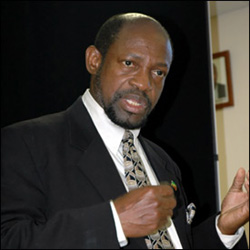
PM Douglas - Labour Party

PM Douglas – Labour Party

Basseterre, St. Kitts – Nevis
The People’s Action Movement
April 30, 2012

While going to press on Thursday, Parliament was debating a Bill shortly entitled “St. Christopher and Nevis Pensions (Amendment) Bill 2012.

The Bill will effectively reduce the level of Pension that a Public Servant can receive having joined the Service after the Bill comes into effect. This move by the Douglas Administration will not affect the pensions of the Prime Minister and any of his Ministers.

In order to appreciate this discourse, it is important to understand that there is a “Premier and Prime Minister’s Pension Act” and a separate Pensions Act for Civil Servants that is styled as “St. Christopher and Nevis Pensions Act”.

The Bill which was being debated brought amendments only to the St. Christopher and Nevis Pensions Act which applies to persons serving the Federation in a civil capacity. In other words only those who are pensionable as public servants.

Civil Servants have been entitled to Gratuity and Pensions before this Bill; however, with the passage of this Amendment, new employees of the Government will no longer be eligible for a Gratuity. That lump sum usually relied upon to clear all outstanding debts so that the monthly pension is free for domestic use. That provision disappears with this Bill.

Civil Servants have been qualifying for full Social Security Pension (a maximum of $3900.00 or 60% of the earned contribution limit) and a Civil Service Pension of 2/3 of emoluments. The combined pension from both sources could exceed the last salary of the pensioner. The Bill restricts the level of combined pensions to 80% of one’s pensionable emoluments.

From the debate on Thursday it became clear that the Bill was not properly thought out and that in effect persons stand to be deprived of earned benefits; and that in some cases, persons who worked for Government and ended up in the Private Sector who also qualify for the maximum Social Security Pensions could find themselves earning much less than their counterparts who never worked for the Public Service. Even though they would all qualify for the present maximum Social Security Pension of $3,900.00, they would gain no benefits from contributing to the Government scheme under the new proposed arrangements.

Meanwhile no amendment is being made to the pension of the Prime Minister Douglas who after retirement would earn from pension much more than his pensionable emoluments. No amendment is being made regarding the pensions of Legislators.

While the object of this article is not to avoid the need for pension reform, so that the burden on the public purse becomes manageable, the Bill in its present draft appears very defective and biased against public servants and even more biased against women who serve as public servants. At the time of going to press, the vote of Hon. Marcella Liburd was not known but her vote will be scrutinized for subsequent comment.

A further reading of the Bill shows that retired public servants will be deprived of their vested benefits that are accumulated from earned contributions; a phenomenon that is unprecedented in the entire hemisphere.

Speaking with the Hon. Eugene Hamilton, Parliamentary Representative for Constituency #8, he advised that he would ask the National Assembly to consider withdrawing the Bill and appoint a Parliamentary Committee to discuss it and make changes, so that full support of the members can be achieved on such an important Governmental Policy change affecting employee benefits.

Mr. Hamilton did not provide all of the details fuelling his decision to garner the support of National Assembly for the withdrawal of the Bill; nor did he provide all of the concerns that he has seen after reading the Bill; but it was quite clear that the Honourable Member was unhappy with what was provided in draft; and how Civil Servants would be adversely affected by its passage.

Related posts:

  1. PM Douglas Announces Double Salary For Public Servants
  2. Pension and Benefits For St. Kitts – Nevis Soldiers
  3. Senator Calls For Cuts In Ministerial Salaries
  4. Labour Government Gives Senior Civil Servants The Axe
  5. St. Kitts – Nevis Civil Servants Urged To Be Professional


April 26th, 2012

St. Kitts – Nevis PM Wants To Renig On USA Loan

St. Kitts - Nevis Debt

Labour Party Leader Wants To Bail On Fiscal Responsibility

Basseterre, St. Kitts – Nevis
April 26, 2012 (CUOPM)

St. Kitts and Nevis has begun discussions with officials in the United States Treasury Department pertaining to the remaining US$2 million debt for the construction of the Dr. Kennedy Simmonds Highway – self-named by the former Prime Minister of the twin-island Federation in the early 1990’s.

Prime Minister the Rt. Hon. Dr. Denzil L. Douglas said Wednesday at his monthly press conference that in an effort to further reduce the national debt, he held talks last weekend while in Washington, D.C., with U.S. Treasury officials pertaining to the existing debt that St. Kitts and Nevis has incurred with the United States.

The entire South East Peninsular Road – the Dr. Kennedy Simmonds Highway – was built with loan funds from the United States Agency for International Development (USAID) and the amount outstanding is about US$2 million.

“I engaged U.S. Treasury officials to set the tone of the discussions that will take place in Paris next month when St. Kitts and Nevis appears before the Paris Club to negotiate with them a reduction in the debt that we have with members of the Paris Club,” said Prime Minister Douglas in response to a question on whether there were further initiatives to reduce the national debt which was lowered by one-third following the recent debt restructuring programme.

Dr. Douglas met with the Treasury official on the sidelines of the IMF/World Bank Spring Meetings in Washington, D.C.

He said the United States Government and the United Kingdom Government were the only two members of the Paris Club that St. Kitts and Nevis are indebted to.

Dr. Douglas intimated that the discussions tried to feel out whether or not there can be complete debt forgiveness of the US$2 million, secondly, whether the existing debt can be restructured within the framework of the recent debt restructuring programme and thirdly whether the life of the loan can be extended with reduced monthly payments.

The delegation from the Ministry of Finance and the debt advisors – which he will head in his capacity as Minister of Finance, will sit before the panel of the Paris Club members to negotiate with the United States and United Kingdom Governments.

“We will know next month what is the final chapter in our debt restructuring exercise that was started last year,” said Prime Minister Douglas.

The highway has been prone to rock fall on the road at Timothy Hill and a temporary bypass road is been used to re-route vehicular traffic.

The condition of the highway was the major talking point at recent meeting of the St. Kitts and Nevis Cabinet.
The Hon. Dr. Earl Asim Martin, Minister of Public Works, Utilities, Local Transport and Housing, accompanied by the Director of Public Works, Mr. Calvin Pemberton, two engineers from the Public Works Department, and representatives and engineers from an engineering firm, ADeB Consulting, presented a comprehensive report of his ministry’s plan to improve the public roads in parts of Basseterre, Frigate Bay and the South-East Peninsula.

“Resurfacing of the road from the Bay Road in the vicinity of Port Zante, along Sandown, along the Frigate Road and to the third round-about at Frigate Bay, resurfacing of the road from the third round-about at Frigate Bay, along the South-East Peninsula (Dr. Kennedy Simmonds Highway) to the Sea Bridge at Majors Bay, and to Cockleshell Beach, the construction of a major round-about at the intersection of the Kim Collins Highway, the Frigate Bay Road and the Bird Rock Road and the construction of a 150 metre drive-through tunnel at Timothy Hill to address the issue of the falling of rocks from the hillside on that part of the road particularly as a result of erosion due to heavy rainfall over time,” said Minister Carty.

Mr. Carty further disclosed that engineers agreed that there was significant deterioration on these segments of the road network, and that given the increasing traffic on them over the years, it was critical from an economic as well as safety standpoint to make major improvements to the identified road segments.

“It was revealed that there is need for only surface work along specific points of the road but that work would have to be done to the sub-stratum in other areas given the damage done to it due to the seepage of rain water over the years,” said the Minister of Information.

Related posts:

  1. St. Kitts and Nevis Reschedules Loan Debt With Taiwan
  2. St. Kitts – Nevis Seeks Child Development Project Loan
  3. Nevis Government Praised For Prompt Loan Repayments
  4. St. Kitts – Nevis PM Denies Government Received $91 Million Check
  5. NIA Gives Small Business Sector Access To $1 Million Loan Facility


April 20th, 2012

PM Douglas To Attend Conference On Sustainable Development In Rio

St. Kitts - Nevis' PM - Denzil Douglas

St. Kitts – Nevis’ PM – Denzil Douglas
Photo By Erasmus Williams

Basseterre, St. Kitts – Nevis
April 20, 2012 (CUOPM)

St. Kitts and Nevis is expected to be represented at the upcoming Rio+20 United Nations Conference on Sustainable Development.

Set for Rio de Janeiro on 20-22 June, the Conference on Sustainable Development hopes to “secure renewed political commitment for sustainable development, assess the progress to date and the remaining gaps in the implementation of the outcomes of the major summits on sustainable development, and address new and emerging challenges.”

The Conference will focus on two themes: a green economy in the context of sustainable development and poverty eradication; and the institutional framework for sustainable development.

Sustainable development has been the overarching goal of the international community since the 1992 United Nations Conference on Environment and Development in Rio de Janeiro.

It emphasizes a holistic, equitable and far-sighted approach to decision-making at all levels and “rests on integration and a balanced consideration of social, economic and environmental goals and objectives in both public and private decision-making.” It also recognizes the special development challenges and concerns of small vulnerable developing states such as those in the Caribbean.

The Rio Conference has the potential to be transforming for its member states, but that depends largely on the political commitment of both developed and developing countries. Regrettably, such commitment may waver in the face of global economic and geopolitical realities: Developed, rapidly developing and developing nations are now grappling with huge fiscal challenges and massive debt levels. Political elections in seven EU countries, including France with the second largest economy in Europe, will also usher in new political thinking that will definitely sway the dialogue on new avenues or envelopes of financing. Such dialogue may not necessarily be in favour of Small Island Developing States (SIDS) such as those which comprise CARICOM. Arriving at any consensus on new envelopes of financing will be a sticking point.

It is against this background that the Special COTED on environment and sustainable development will have to shape its agenda for its Georgetown meeting on Friday. CARICOM ministers will need to establish and agree on clear regional priorities as well as a concrete approach on how they intend to engage their counterparts at the Rio+ 20 Conference.

The issue of our approach to developing the green economy has to be at the top of the agenda. The concept of green economy focuses primarily on the nexus between the environment, the economy and the social realities facing the Caribbean region. The underlying challenge for CARICOM is to determine how its focus on a green economy, in the context of sustainable development and poverty eradication, can foster regional development and a better quality of life for its peoples.

In this regard, the 39th COTED held recently discussed and adopted an approach to developing a green economy and be ready to articulate what it considers the minimum architecture for the green economy framework to guide us in the next decade.

For it to do so however, all Member States have to be in the choir, singing from the same hymn sheet regarding a common understanding and approach to developing a green economy. This must be done before the Rio de Janeiro Conference where a cleaner definition will be established.

In preparing for Rio+20, CARICOM Environment Ministers will also need to address the structural issues that impact its poverty alleviation and eradication efforts within the Caribbean Region.

The Region needs appropriate financing mechanisms, policies, regulations and governance framework to be able to implement any sustainable development strategy that it develops. We also need to address the challenging issue of escalating energy and labour costs as well as the cost of raw materials. In the absence of new financing mechanisms, as part of the Rio strategy, the COTED may need to look at how it can re-shape existing funds disbursement and present a plan of action to the conference.

Institutional reform of the global architecture for sustainable development is also a burning issue, as countries within the prevailing economic climate grapple to decide which or what form of intergovernmental system is best suited and equipped to take on sustainable development and to address the implementation deficit which has posed a challenge for CARICOM over the years.

This deficit has become even more pronounced in light of the complex and defused issues surrounding sustainable development. The COTED will need to examine these carefully.

The anticipated outcome from the 39th Special COTED therefore cannot be any “urging,” it must be a decision for a clear regional agenda for sustainable development. If we fail to set our own agenda, then someone else will do so through their own country development assistance programs. The region is only too familiar with the notion that “one size doesn’t fit all.”

For this COTED therefore, it cannot be business as usual; it must spawn a foolproof strategy on how CARICOM is going to the Rio+20 to help shape the future we want for our children and their children.


Related posts:

  1. Caribbean Sustainable Tourism Conference To Be Held In Guyana
  2. St. Kitts – Nevis Looks To Solar Energy For Sustainable Development
  3. Nevis Praised For Sustainable Agriculture Development
  4. Douglas To Be Keynote Speaker at MIT Caribbean Students Conference
  5. St. Kitts – Nevis To Attend PSC Conference


Google
 
Web www.nevisblog.com