Nevis, West Indies. ?A Non-Tourist-Trap? Blog About Nevis.

December 26th, 2011

CARICOM Chairman Looks Back Fondly At 2011

Dr. Denzil Douglas

Dr. Denzil Douglas
Photo By Erasmus Williams

Basseterre, St. Kitts – Nevis
December 26, 2011 (CUOPM)

Outgoing CARICOM Chairman, St. Kitts and Nevis’ Prime Minister the Rt. Hon. Dr. Denzil L. Douglas says despite the ongoing global economic and financial crises, the 15-member regional integration group has remained a “symbol of stability and good governance.”

In a Christmas message to the region, Dr. Douglas said reflections on the past year will be coloured by the challenges spawned by the current period of global uncertainties.

“The challenges, including those directly related to the global economic and financial crises have honed our attention particularly on finding creative ways to confront them. We have sought, for example, to encourage foreign investment from new areas and welcomed the interest shown by India, China and Japan, all of whom mounted trade and investment missions to the Region seeking opportunities,” he pointed out.

Dr. Douglas said the continuing increases in the prices of food and the search for food sovereignty have engaged the CARICOM attention.

“Our stakeholders in the agriculture sector, as evinced most recently in Dominica where they participated in the Caribbean Week of Agriculture, are working assiduously to find a solution to those particular challenges. We must continue to encourage them by buying and consuming locally grown food – which we are by no means short of – so that we could lower our very high food import bill, and at the same time, maintain healthy lifestyles,” Dr. Douglas said.

In advancing the latter ideal, Prime Minister Douglas said that the Community can take pride in the fact that it provided the leadership to appropriately position on the international stage, the threat of Non-Communicable Diseases (NCDs).

As a result of the Community’s tireless advocacy, the United Nations (UN) General Assembly agreed to convene a High Level Meeting (HLM) on Non-Communicable Diseases (NCDs) which was held in September in New York, although the outcome may not have been as ambitious as had envisaged.

“Regionally, we have made great strides in initiating operations of the Caribbean Public Health Agency (CARPHA), a consolidation of five regional health institutions. The Agency, I am pleased to announce, will come on stream early in the New Year. Our solid achievements in health have extended also to successes recorded by the Pan Caribbean Partnership Against HIV/AIDS (PANCAP),” he said in his Christmas message to the people of the Caribbean.

“People of the Community, securing your livelihood and well-being have been at the forefront of our activities; however, given their importance to our Community, we have placed much emphasis on youth development. In the last quarter of this year, we boosted our campaign against youth gangs and gang violence with interventions across the Region that have yielded encouraging results and which will determine our response going forward,” said Dr. Douglas.

He said that a major factor in ensuring that well-being and indeed the existence is a commitment to the adaptation and mitigation of Climate Change.

“Earlier this month, at the UN Climate Change Conference in Durban, South Africa, we continued our advocacy for attention to be paid to the deleterious effects of climate change on the natural environments and economies of our small states. One of the outcomes of the Durban Conference was a decision by Parties to adopt a universal legal agreement on climate change as soon as possible, and no later than 2015. The Community, in particular, through Grenada’s leadership of the Alliance of Small Island States (AOSIS), ensured that a number of our concerns was addressed in the outcome document,” the CARICOM Chairman said.

He also mentioned the continued quest to cement relations with Third States and Groups of States with some emphasis on those in the Hemisphere.

A plan of action for closer co-operation and joint initiatives was drawn up with the Integration System of Central America (SICA) in a range of areas and work has begun through the two regional Secretariats to ensure that these initiatives make an impact on the lives of the people of both Regions.

Dr. Douglas said he was particularly pleased to participate in the Fourth CARICOM-Cuba Summit held in Trinidad and Tobago earlier in December, where the Community renewed and advanced its longstanding relationship with Cuba.

“There are also meaningful people-centered activities arising out of that encounter in health, agriculture, infrastructure building and culture, which would doubtlessly improve the well-being of our citizens,” he said.

Looking back on 2011, “we can do so with a measure of comfort that we have fulfilled the charge delivered at the beginning of the year by my predecessor, the Hon. Tillman Thomas, Prime Minister of Grenada, to make 2011 a ‘watershed year,’ a year when a new generation of leaders would take their place in the Community. At that time, we were confident that we would weather the multiple storms that were facing us by dint of strengthening community bonds, cooperating with each other and utilising all the skills available to us.”

He also noted that one of his first tasks as Chairman of the Community was to install Ambassador Irwin LaRocque as the new Secretary-General of CARICOM, an occasion which, “for me, heralded a turning point in the history of our Community.”

“He has begun the task of finding creative ways to chart the Community’s course in the current global environment. As we contemplate our resolutions for the new year, let us collectively pledge to work together to build on our founding fathers’ dreams of regional integration, securing a community for all for generations to come.

“During our celebration of this season of goodwill, let us, as a Community, reflect on our achievements over the year that is fast ending, a reflection that will no doubt be coloured by the challenges spawned by the current period of global uncertainties,” he said.

Dr. Douglas said those external upheavals have served to strengthen the resolve to drive the integration movement forward, a stance for which there has been firm support and commitment from the regional populace.

“I wish to reiterate my commendation to you for your resilience and for the outstanding qualities that have enabled our Community to remain a symbol of stability and good governance, reflected in our embrace of democratic processes,” the CARICOM Chairman said.


Related posts:

  1. The Caribbean Hails Brazil-CARICOM Summit
  2. PM and CARICOM Heads To Meet World Bank President
  3. St. Kitts – Nevis PM To Speak At PM CARICOM 31
  4. New CARICOM Secretary General Is Sworn In
  5. St. Kitts – Nevis U.N. Ambassador Leads Federation’s Delegation To CARICOM meeting


October 16th, 2011

St. Kitts – Nevis Co-chairs Caribbean Basin Security Initiative Commission

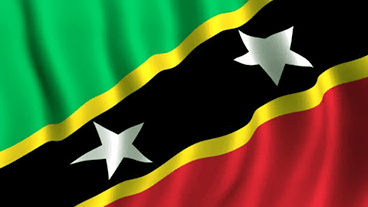
St. Kitts - Nevis Flag

Meeting Held In Guyana

Basseterre, St. Kitts – Nevis
October 17, 2011 (CUOPM)

St. Kitts and Nevis’ representative to the Second Meeting of the Caribbean Basin Security Initiative (CBSI) Commission, in Guyana, said the region will advance its mandate to take security to a higher level.

“We are committed to fighting those evils,” he averred. “Our country will work closely and with courage to achieve this extremely important task,” said Mrs. Browne, Permanent Secretary in the Office of the Prime Minister and Co-Chair of the CBSI Commission.

She asserted that significant stride had been made in combating crime in the Region and avowed that “we will advance with our mandate to take security in the region to a higher level.”

However, she warned that “we cannot survive alone.” “We must build strong bridges of cooperation with traditional and non-traditional states and agencies that are committed to the cause of global peace,” she said.

Notwithstanding the perception that progress was slow, Mrs. Browne asserted, “We will continue to interrupt the plans of criminals who would venture to move through our borders and disrupt those who would dare to perpetrate criminal activities in our waters.”

United States Ambassador to Guyana and representative to CARICOM His Excellency Dr. Brent Hardt, who also delivered remarks at the opening ceremony, emphasized that the CBSI had emerged as a genuine partnership among several nations and provided a vehicle through which other nations in the world who were interested in the Caribbean could lend their support to the partnership.

He added that the Meeting would provide the partnership with the opportunity to take stock of collective accomplishments to date, review the results of the Technical Working Groups and use those results to lay the ground work for Second Caribbean-United States Security Cooperation Dialogue set for the Bahamas in November.

“At the end of our gathering tomorrow we hope that all participants will be able to return home with renewed commitment to the CBSI partnership and a renewed belief that we can work together to enhance the safety and security of our citizens through our cooperation, creativity and perseverance,” Ambassador Hardt concluded.

Guyana Minister of Home Affairs the Hon. Clement Rohee has called for “practical well-thought out solutions” to relieve the strain on Caribbean populations by eliminating the causes of crime at the local, regional and hemispheric levels.

Minister Rohee acknowledged progress made by the partnership to date, but added that “much more work needed to be done,” to ensure that the peoples of both regions could feel secure.

The Guyana Minister of Home Affairs acknowledged that the CBSI was the type of security cooperation that was capable of addressing numerous challenges facing both the United States and the Caribbean region as they partnered to reduce illicit trafficking, advance public safety and security and promote social justice.

However, he expressed the view that it was now time for the Commission to roll-out strategies and programs to tackle the heart of the problem and to address the growing problem of youth gangs and gang violence. He enumerated several recent threats to security in the region including transnational organised crime, illicit trafficking in small arms and light weapons, cybercrimes and terrorism, and asserted that those threats required a comprehensive regional and hemispheric approach.

“It has been accepted that only through partnerships at every levels can we arrest the problem of crime and violence…our interdependence forces us to work collectively, for our neighbour’s problems today could be ours tomorrow,” he cautioned.

Minister Rohee told the meeting of security officials that Guyana was committed to the partnership and would continue to fight crime in all its manifestations. He reported that his country had passed several pieces of anti-crime legislation recently, and was in the process of equipping the security forces with modern technology to fight crime.

The Caribbean Basin Security Initiative was launched in May 2010 following US President Barrack Obama’s announcement to plough an initial US$45 million into the Caribbean to start a “shared security partnership” among CARICOM Member States, the Dominican Republic and the United States with a view to tackling crime and violence in both regions.

The Dominican Republic’s Ambassador-at-Large to CARICOM, His Excellency Juan Guiliani Cury, in adding his remarks, outlined several priorities which the partnership had been addressing. Those include organised crime, youth crimes and maritime and aerial space security.


Related posts:

  1. St. Kitts – Nevis National Security Official Co-chairs US-CARICOM Meeting
  2. Caribbean and US Officials To Discuss Security Issues
  3. PM Requests Merida Initiative To Include The Caribbean
  4. USA Joins Caribbean Nations In Fight Against Crime
  5. Eastern Caribbean Security Workshop To Be Held In St. Kitts


July 7th, 2011

Caribbean Leaders Take Aim At Illegal Weapons Trade

Ban Handguns Now

Gun Crime Out Of Control In The Caribbean

Basseterre, St. Kitts – Nevis
July 07, 2011 (CUOPM)

Caribbean Community (CARICOM) leaders say they are fully committed to efforts aimed at combating and eradicating the proliferation of and the illicit trade in small and light weapons and ammunition.

In a Declaration issued at the end of their annual summit in St. Kitts and Nevis, under the chairmanship of St. Kitts and Nevis Prime Minister Hon. Dr. Denzil L. Douglas, the regional governments said that they were also committed to ensuring the region’s full and active participation in regional and international meetings related to the issue of small arms including the 2012 Review of the 2001 Programme of Action to Prevent, Combat and Eradicate the Illicit Trade in Small Arms and Light Weapons in All its Aspects, and the 2012 United Nations Conference on the Arms Trade Treaty.

The leaders recall that security has been established as the “Fourth Pillar of the Community” and the statement issued at the 2008 special meeting on all aspects of crime and violence in the region.

They said they strongly deplore the “ease of access to illicit small arms and light weapons and ammunition, particularly given that the region does not manufacture, export or re-export these weapons, nor import them on a large scale” and that a “comprehensive, multi-sectoral approach is necessary to prevent, combat and eradicate the illicit trade in small arms and light weapons and ammunition.”

The regional countries said that they are committed to implementing “all necessary actions at the national and regional level” to deal with the situation as well as “take all necessary measures to ensure full compliance with the 2001 Programme of Action to Combat and Eradicate the Illicit Trade in Small Arms and Light Weapons, including through the development and implementation of national action plans to combat the illicit trade in small arms and light weapons.”

They said they would empower national and regional security entities, with the necessary capacities to combat the proliferation of small arms and light weapons and their ammunition, as well as other elements of transnational organized crime, including in the areas of border control, intelligence gathering, and forensic analysis.

They have also pledged to work together in enhancing the management and security of small arms and light weapons and ammunition stockpiles, “including the identification and destruction of surplus.”


Related posts:

  1. Nevis Police Arrest Two And Sieze Illegal Weapons
  2. United States Urged To Curb Trafficking of Weapons To The Caribbean
  3. Caribbean Leaders To Combat Rising Regional Crime
  4. Caribbean Leaders Tackle Youth, Trade, and IT Issues
  5. Grant Says Govt. Needs To Move On Weapons Tracing


Google
 
Web www.nevisblog.com